ClassDojo: Taking Dojo Tutor from MVP to a learning marketplace families and tutors trust.
Dojo Tutor is ClassDojo’s marketplace connecting tutors and families across a wide range of subjects, in both 1-on-1 and group formats. I design for everyone it serves: tutors running their businesses, parents managing their children’s learning, students in class, and the internal team that manages the platform behind the scenes. I own the core experience end to end, from research and early concepts through high-fidelity design and implementation, often shipping features myself with AI coding agents.
From matching service to marketplace: +20% LTV year over year
Dojo Tutor launched in 2023 as a matching service: the platform paired students with tutors and charged a fixed price for all classes. The product was an MVP, but the goal was a true marketplace where tutors could grow and run their own businesses.
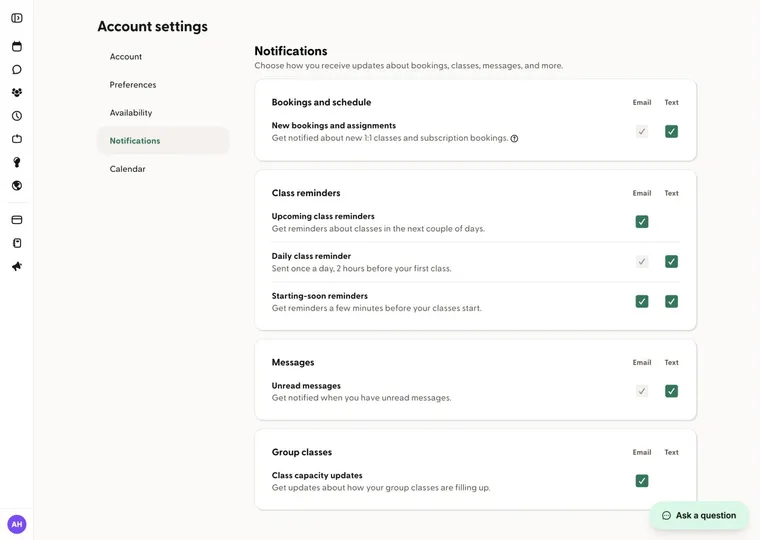
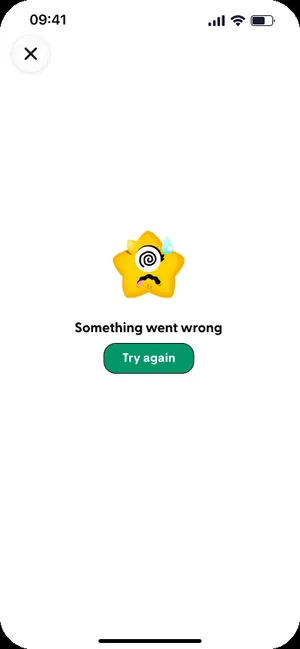
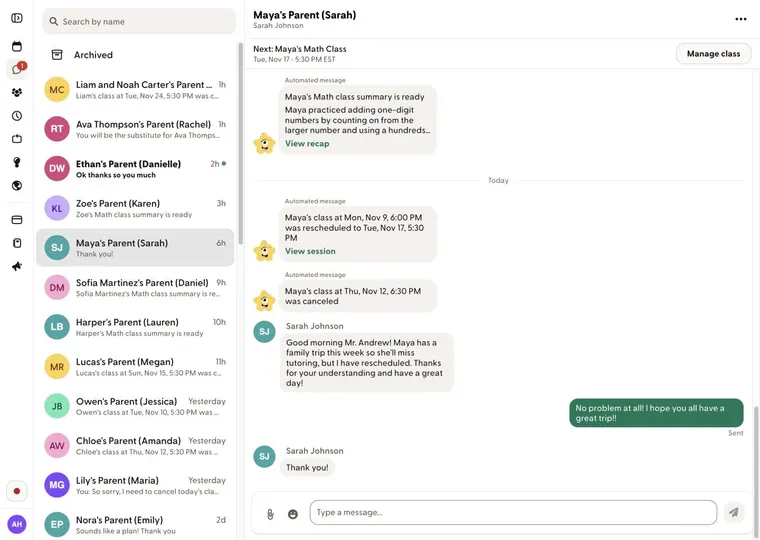
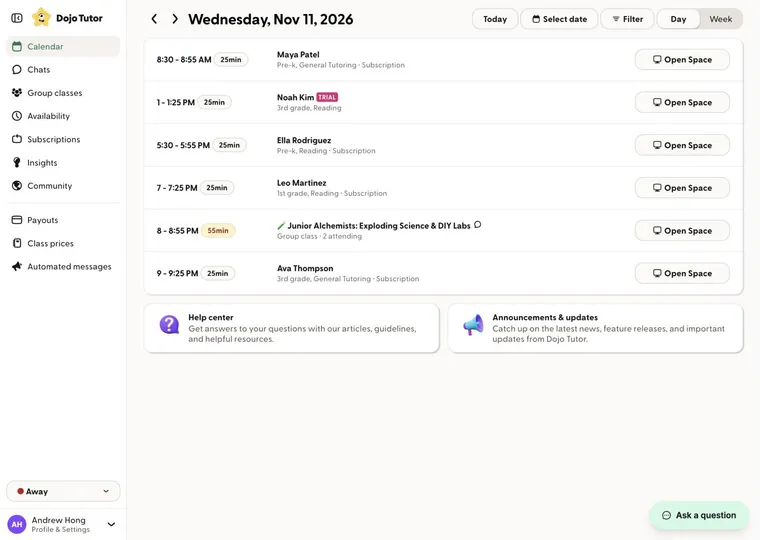
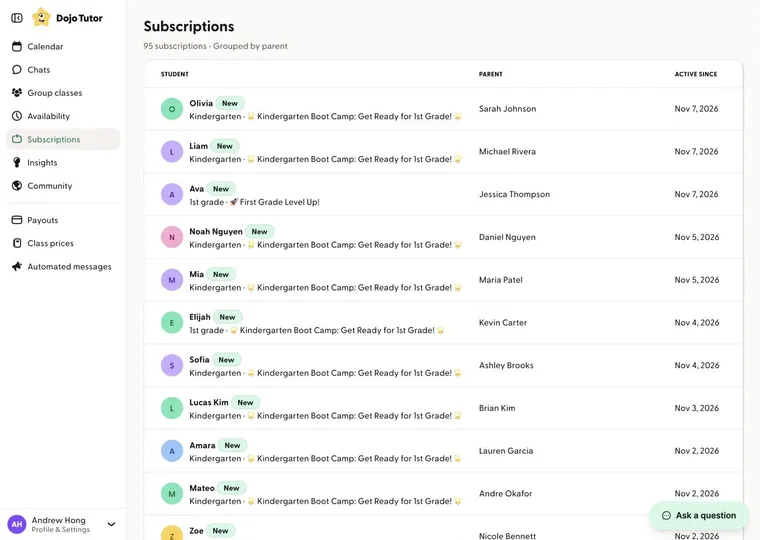
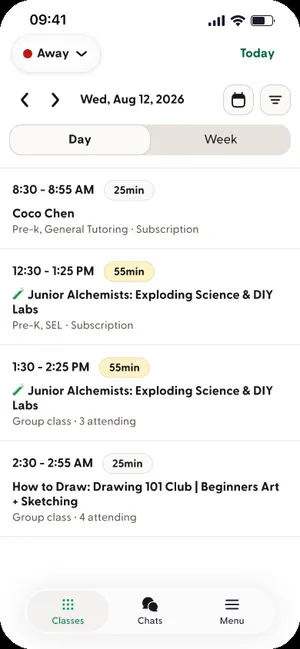
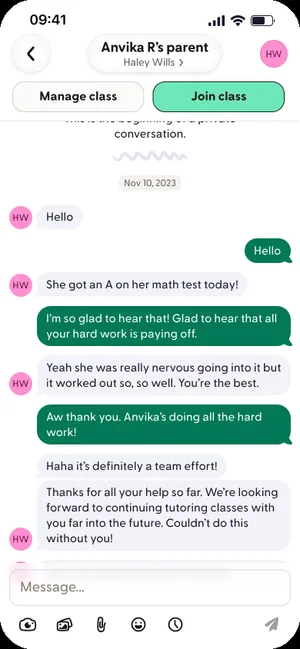
Since joining in 2024, I’ve redesigned every post-purchase surface for tutors and families. I’ve also added the core features a marketplace needs: schedule management, tutor-set pricing, direct messaging, automated marketing tools, and payment management.
These additions have enabled tutors to better retain families thereby increasing LTV by +20% YoY.


Keeping a high craft bar while building with AI coding agents
AI agents make it easy to produce a lot of UI quickly. The challenge is keeping it coherent and well crafted. I set up Dojo Tutor’s design system so AI-generated UI stays on-pattern, and I review and refine what agents produce before it ships.
I used Codex and Claude Code to build over half of Dojo Tutor’s frontend surfaces across both the parent- and tutor-facing experiences, with backend contributions as well.
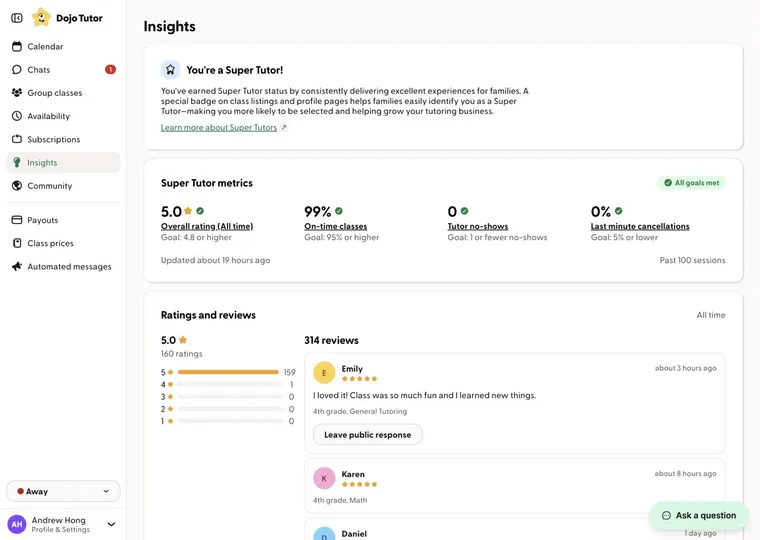
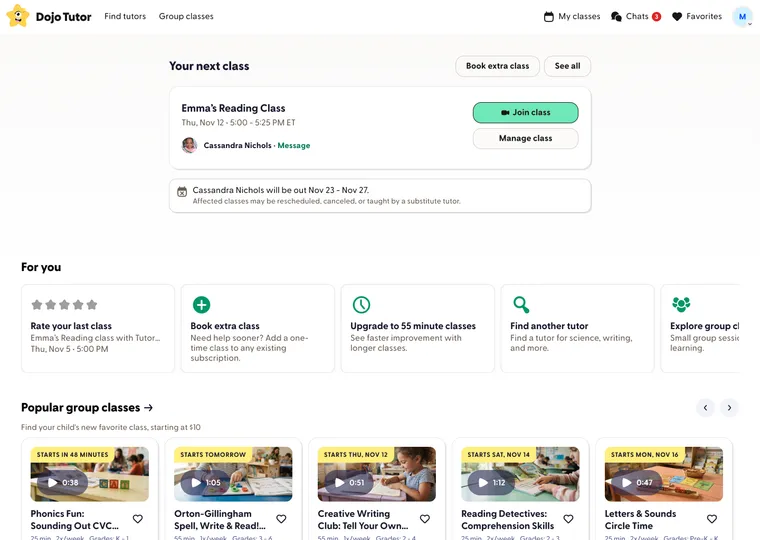
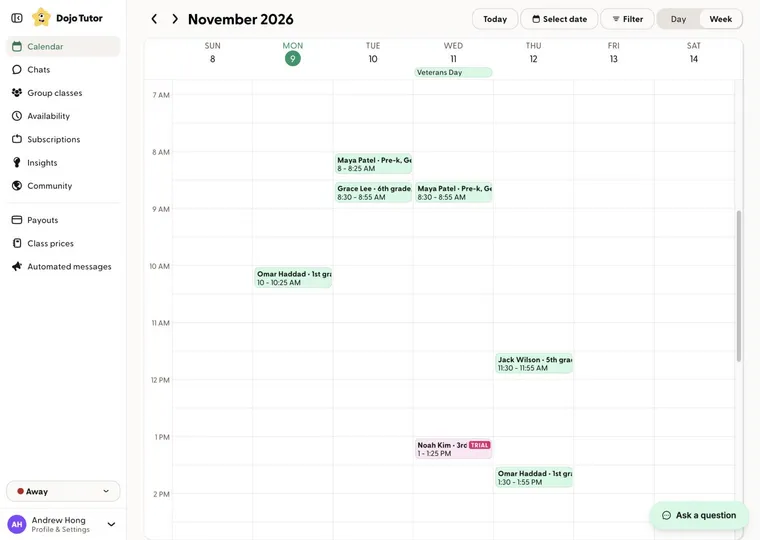
This includes updated calendar and performance metrics tools for tutors, and a new homepage for parents to manage their classes and find new tutors and group classes.
My workflow included setting up Dojo Tutor’s design system to integrate smoothly with AI-generated UI and partnering with engineers during the planning process before implementing.
My AI-powered workflows are constantly being refined with new models, AI-native design tools, and test suites for code quality.
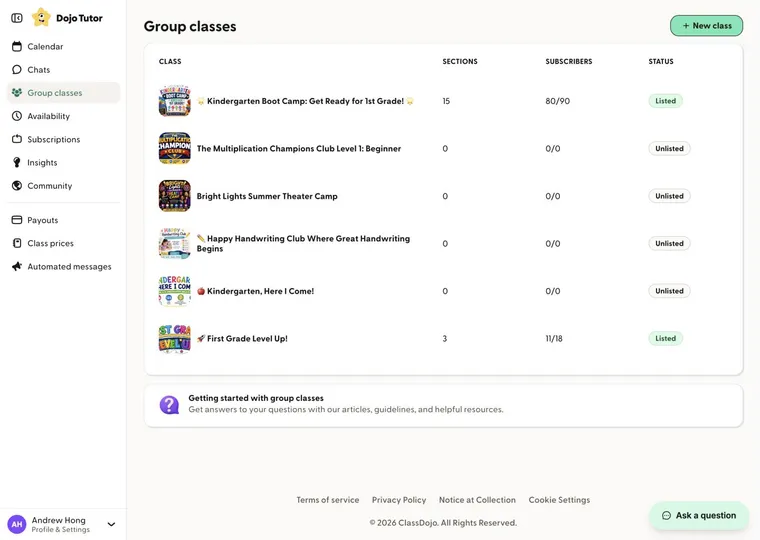
Group classes: +10% revenue, with safety review built in
Dojo Tutor launched with 1-on-1 online tutoring only. In early 2026, we introduced group classes, our largest product expansion to date.
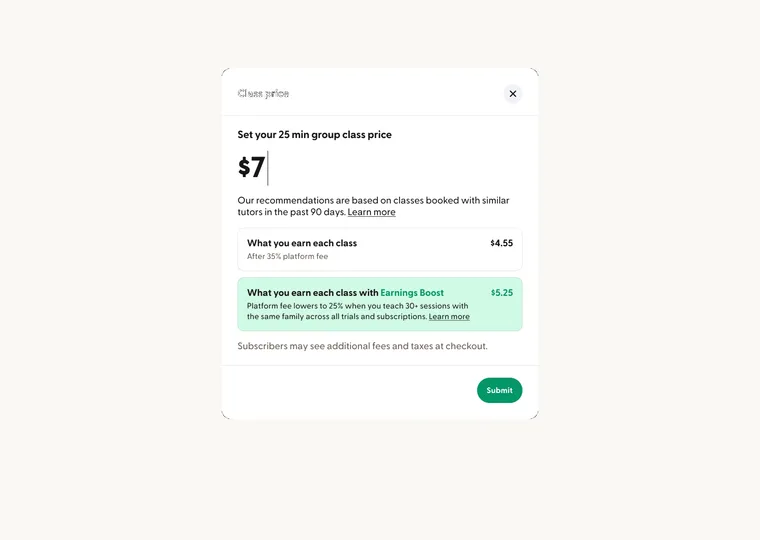
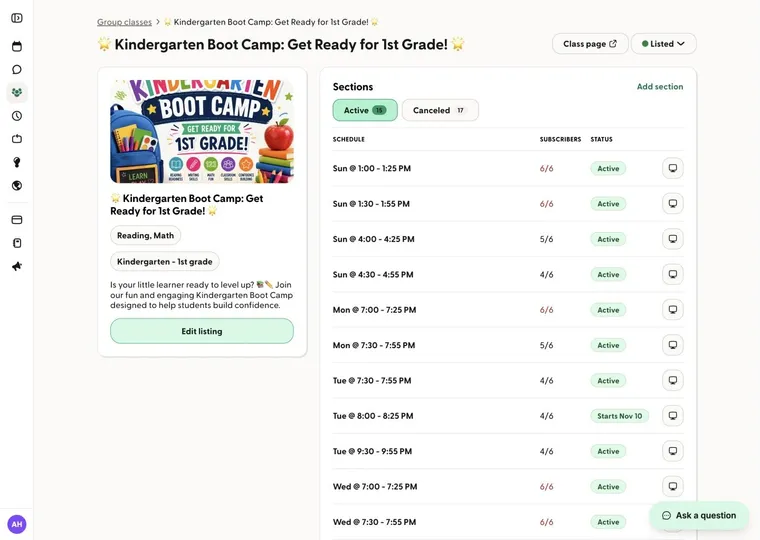
I designed the tutor experience for creating and managing group classes, along with the internal tools our team uses to review class submissions for inappropriate or unsafe content, class quality, and to provide feedback that will help tutors with converting students.
Within the first 8 months of launch, group classes grew Dojo Tutor’s overall revenue by 10%.


Tutor-set pricing: 70% of tutors opted in within 3 months
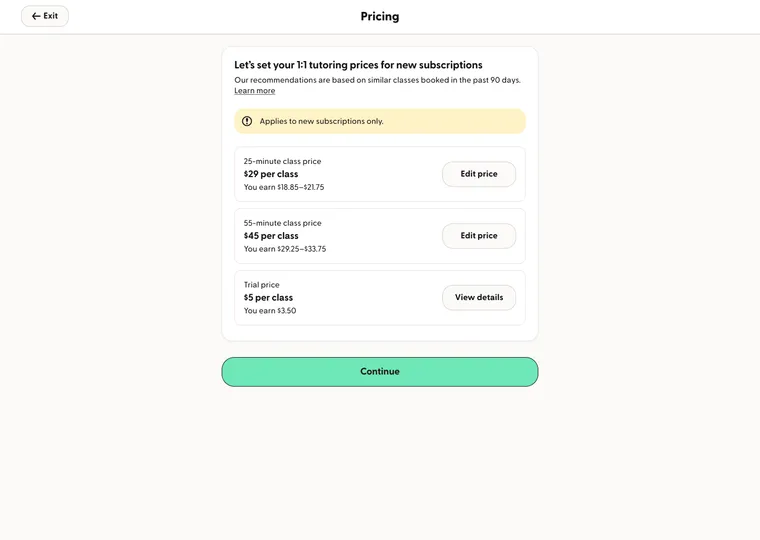
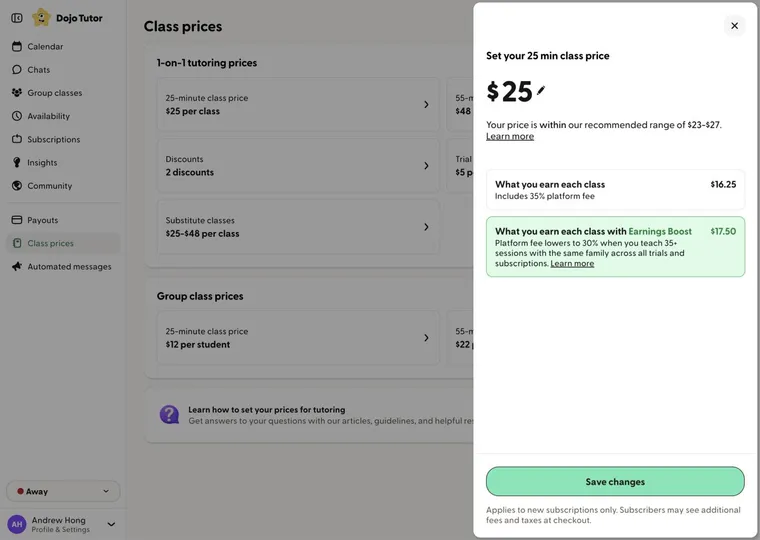
Prices used to be fixed by the platform. Dojo Tutor sought to allow tutors to set their own prices, allowing them to charge more for specialty topics as well as open up more affordable tutoring options for families.
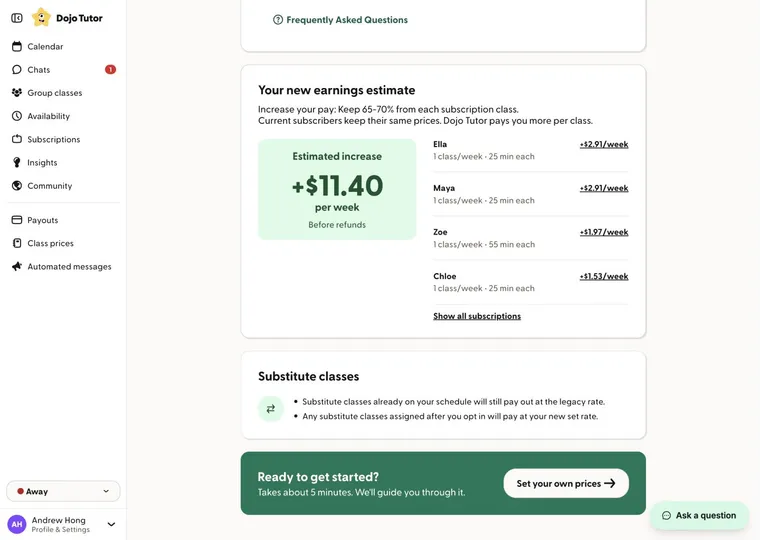
Research showed that while the majority of tutors were interested in setting their own prices, many were concerned about a “race to the bottom” as tutors competed on price. This informed how we calculated marketplace fees to increase tutor take-home pay as well as working with tutors to communicate their value instead of treating their tutoring as an undifferentiated experience in the marketplace.
I designed and built much of the frontend for tutor pricing, including the first-time experience, setting rates, adding discounts, and surfacing market data so tutors can price competitively.
Despite widespread apprehension from our tutor community, over 70% of tutors opted into the new pricing model within the first 3 months of release.


Native tutor apps from zero to one, launching December 2026
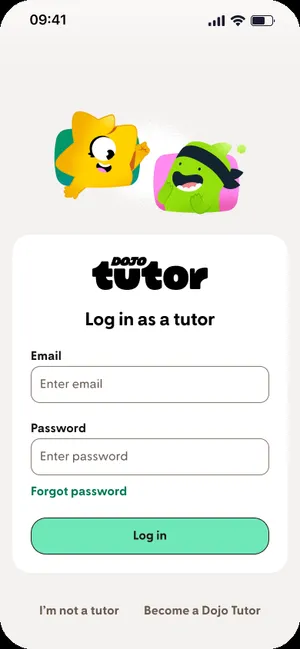
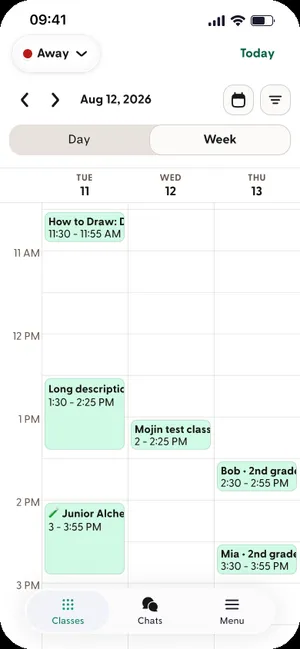
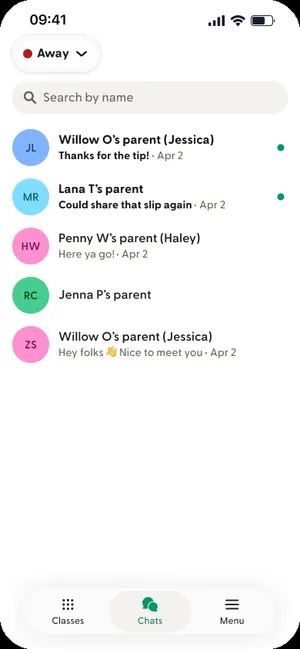
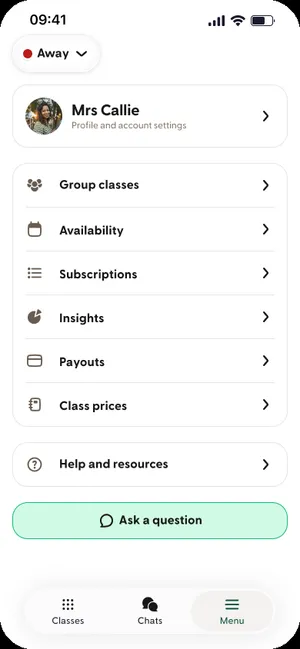
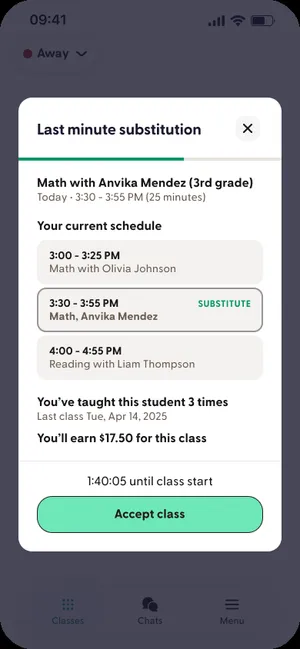
I designed native iOS and Android apps that let tutors message families, manage their classes, and claim open spots in classes that need a substitute.
Push notifications allow for more responsiveness when talking to prospective students as well as active subscribers. They also allow us to inform tutors of classes in need of a substitute similar to the dispatch model of rideshare apps.
